UAF explores gravel resources on Matanuska Greenbelt trails in Palmer
The chancellor explained the effort was part of an agreement with the state to look at new fiscal opportunities on university land.

ANCHORAGE, Alaska (KTUU) -With extensive state budget cuts, the University of Alaska Fairbanks is trying to find new revenue sources.
UAF Chancellor Dan White said it’s part of the university’s agreement with the state to explore land resources to possibly fill in budget gaps.
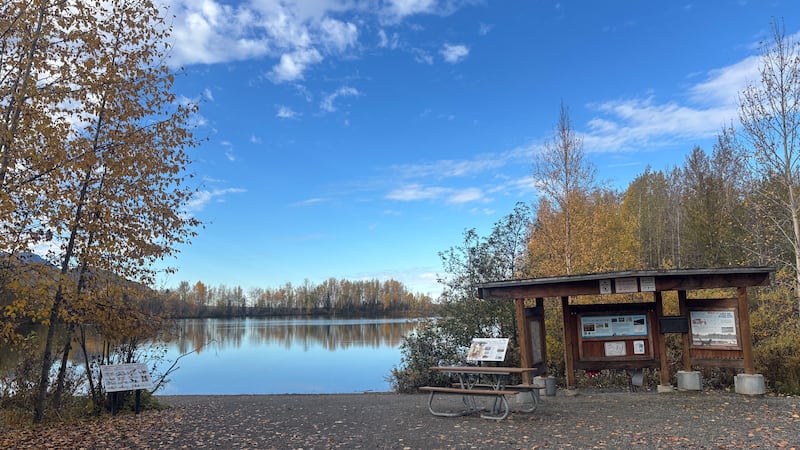
The work includes looking for gravel on its land at the Matanuska Experiment Farm in Palmer. The excavation work is being done more than two miles from the Kin-Win Trailhead.
“All that’s happening right now is some test pits. That is to say, an excavator will go out and dig up a scoop of soil and that soil will be analyzed and then some boreholes,” White said.
A UAF contractor is digging into two areas: an existing gravel pit on the farm and a 70-acre parcel along the Greenbelt trails.
“The contractor will do everything they can do minimize the disruption. There’s not going to be drilling, for example, on the weekends so that there’s not conflicts with users or disruptions to users,” White said.
That 70-acre parcel encompasses trails in the 30-mile Matanuska Greenbelt that crisscrosses through university land, as well as Mat-Su Borough and state land.
The Matanuska Experiment Farm has several hundred acres of cultivated land that are used for growing food and testing vegetable and grain varieties. The property also includes 800 acres of forest that incorporate the Greenbelt trails.
“In prior times this was the heart of agriculture here in the Valley,” said Alaska Farmland Trust Executive Director Amy Pettit.
She said all of that land is a valuable resource in an area with an increasing population.
“[It’s] surrounded by development, by housing developments, by other gravel pits, etcetera. This is one of the last remaining large chunks of green space, farmland, waterways,” Pettit said.
Mat-Su Assembly member Stephanie Nowers said she only found out about the project after crews started the work. She was concerned about the university’s lack of transparency.
“I know the university is hurting financially ... but as far as I can tell, there hasn’t been any attempt to do any public outreach or notice on this,” Nowers said.
The University of Alaska system may have to trim up to $30 million for the upcoming 2022 fiscal year. White said UAF has taken measures like cutting programs and selling off building assets to help fill in the gap.
“Resource development may or may not be a piece of it but we have to be able to answer the question,” White said.
Pettit said she understands the need to find more revenue but wants UAF to find another location.
“Gravel is an amazing resource we need more of, if we’re going to pave roads, if we’re going to have access to places, we need gravel, but you can get gravel in a lot of places around this valley and it doesn’t have to be here,” Pettit said.
White said the UA Board of Regents would have to approve any major excavation project before it went forward. He also said the university is listening to community feedback.
Pettit and Nowers urge people to voice their opinions on the issue and are looking to put together informational meetings to listen to concerns.
Copyright 2020 KTUU. All rights reserved.