Missing and Murdered Indigenous Persons Day recognized with rally in Fairbanks
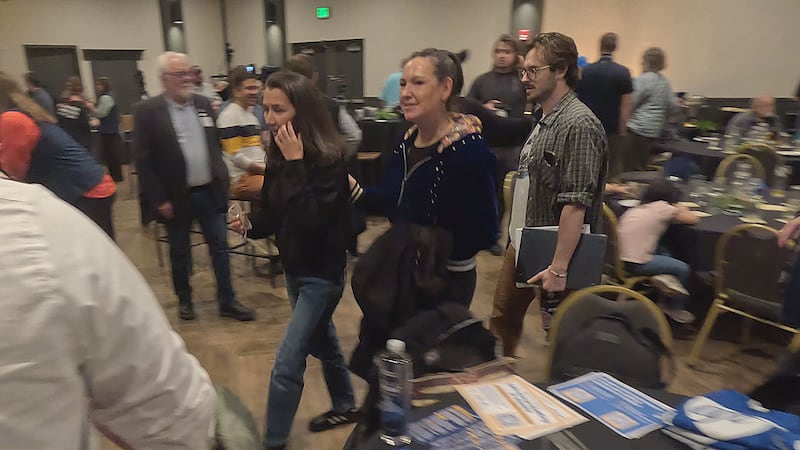
FAIRBANKS, Alaska (KTUU/KTVF) - May 5 is recognized as Missing and Murdered Indigenous Persons (MMIP) Day. That day was recognized in Fairbanks with a gathering of residents and community leaders.
“This is such an emotional event because we’re gathered for the people who we’ve lost and who we’re looking for and my heart goes out to each and every one of you, to all of our community who is missing someone, who shouldn’t be missing,” said Nanieezh Peter, an artist that performed at the event.
The gathering began at noon in Golden Heart Plaza, in downtown Fairbanks. Among those in attendance were the friends and families impacted by missing and murdered persons cases as well as leaders of the indigenous community, local government, law enforcement and St. Matthew’s Episcopal Church.
These leaders spoke to the crowd about the importance of the day and the impact MMIP cases have had on the community.
“34 years ago, there was a young UAF student... and she stepped into the bathroom and the dorm to have a cigarette. That’s how kind of all this started,” said Rev. Scott Fisher. “Her name was Sophie Sergie. I remember standing up that hill because her death shocked the whole community.”
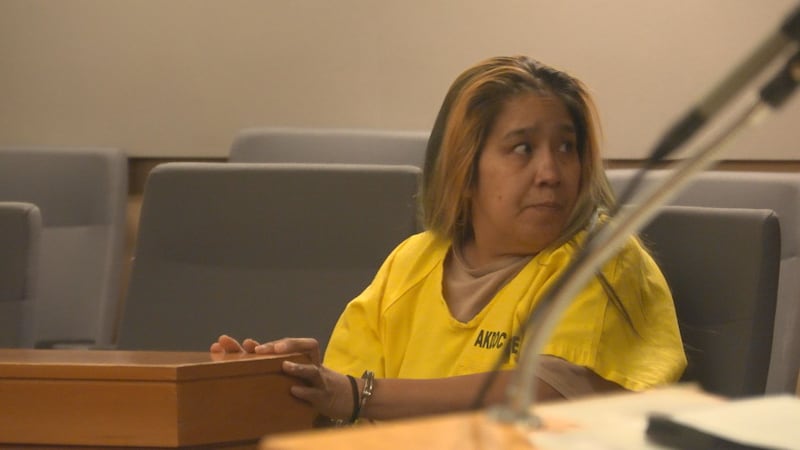
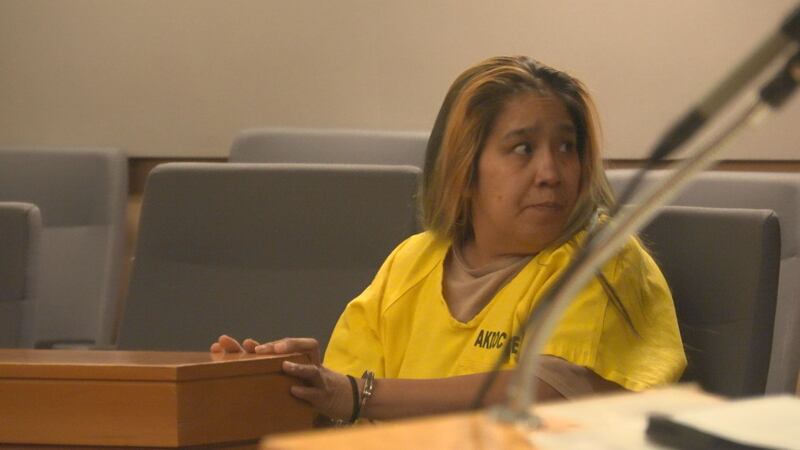
Steven Downs was convicted of killing Sergie in 2022, but here case is just one of hundreds and many remain unresolved.
There have been hundreds of these cases, many of which remain unsolved.
“Each year it gets harder and harder for me to say the names. Names of loved ones taken by violence, names of loved ones who have disappeared, their life ending, unknown. The list is long,” said Rev. Shirley Lee, who organized the event. “One name is too long.”
She said it requires all of us to make the world safer and she wants those that attended the rally to take action to make a difference. “Do something, help get the word out on the cases, support the families.”
An example of action resulting in resolution came in the form of a story from Sharon Hildebrand, the Chief and Chairman of Tanana Chiefs Conference, who lost her mother as a child.
“She was taken by someone here in Fairbanks when she was just 24 years old and we never solved that case for 33 years and by a miracle, we found her remains, a hunter found her remains, and we were able to lay her to rest in Nulato,” she said.
Sharon McConnell, the director of Denakkanaaga, also shared a story of how she’s been impacted by the endemic of MMIP cases. Her cousin Debra ’Debbie’ Nictune, went missing in 2020. “When I drive past Northward Building, I look at that building and I think, ‘where are you, Debbie,’” she said.
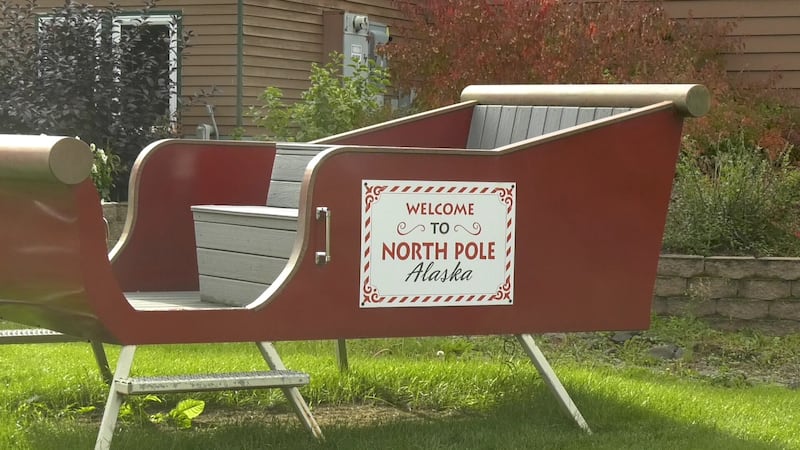
Mayors from the Fairbanks North Star Borough took to the stage together. Borough Mayor Grier Hopkins read out a proclamation passed by the borough, City of Fairbanks and City of North Pole.
“These names on these signs and the names that will be read are not just names that we know and that we see in our community and on social media. They are the families and the loved ones and the people that we meet in the highest level meetings and throughout our jobs. We need to remember that,” he said.
“Here in Fairbanks, this crisis is real and deeply personal. It’s part of our community’s story, and it’s part of the responsibility we carry together,” added Mindy O’Neall, the mayor of the City of Fairbanks.
“Here in Alaska, we continue to see some of the highest numbers of MMIP cases in the nation, and Fairbanks is included on that list. Indigenous people make up 20% of Alaska’s population, yet they are represented far more in the numbers of missing persons and homicide cases. These numbers reflect real families in our community, families who deserve answers, support, and a system that works for them.”
“Ceremonies like this are important because they force us to confront something difficult, loss without closure. There’s unique kind of pain that comes from not knowing,” said Rick Sweet, deputy chief of the Fairbanks Police Department.
He said those in law enforcement are left with the same questions as the families and friends that endure that loss.
“Leadership in this environment means resisting the temptation to offer simple explanations for complex human realities,” he added. He continued, saying that the expectation for handling these cases has changed as well, and it’s up to officers to adapt to those changes, working with families and being urgent and transparent with communities.
Commander Eric Spitzer of the Alaska State Troopers emphasized the need of community and law enforcement cooperation in solving these issues.
“Alaska State Troopers can’t do it alone, the Fairbanks Police Department can’t do it alone, North Pole P.D. can’t do it alone. We need your help.”
He added that he has instructed his officers to treat each of these cases as if they were looking for their own family members.
The event ended with attendees going to the William Ransom Wood Centennial Bridge nearby to cast flowers into the Chena River as a symbol of remembrance.
See a spelling or grammar error? Report it to web@ktuu.com
Copyright 2026 KTUU. All rights reserved.