Where is green-up? Why 2026 spring greenery is arriving later than usual
ANCHORAGE, Alaska (KTUU) - Green-up across Alaska is when birch trees bloom and show off their vibrant green color, a tell-tale sign that spring truly has sprung.
Anchorage typically sees green-up take place within the first two weeks of May, with Fairbanks usually following suit just a week later. This 2026 green-up season, however, is a bit behind schedule.
“When we’re looking for green up, we really are looking for when those, when the leaves burst out of those buds. And that has not happened yet,” explained Climatologist Rick Thoman.
Temperatures in both Anchorage and Fairbanks have reflected a below-average trend since the Spring season began. With cooler temperatures and cloudy skies, spring foliage is taking longer to occur.
“We just haven’t had that accumulated warmth. And that’s really what the trees need. They need that accumulation of warmth to get the sap flowing and then for the leaves to go. We’re getting there, but we’re definitely later than normal,” Thoman said.
March temperatures in Fairbanks remained below freezing each day, with Anchorage hardly reaching above the freezing threshold.
Though March was most notable in terms of colder temperatures, April and May are following the below-average trend for daytime temperatures, slowing progress and prolonging the spring bloom.
“It’s the spring temperatures that matter, particularly the kind of cool or at least not very warm daytime temperatures that we’ve had in April and so far in May are really keeping things at a slower pace than is typical,” said Thoman.
Thoman calculated a nearly 30 percent chance of Anchorage’s green-up occurring by May 19 or sooner, with over 65 percent likelihood that the green-up will occur between May 20 and 24.
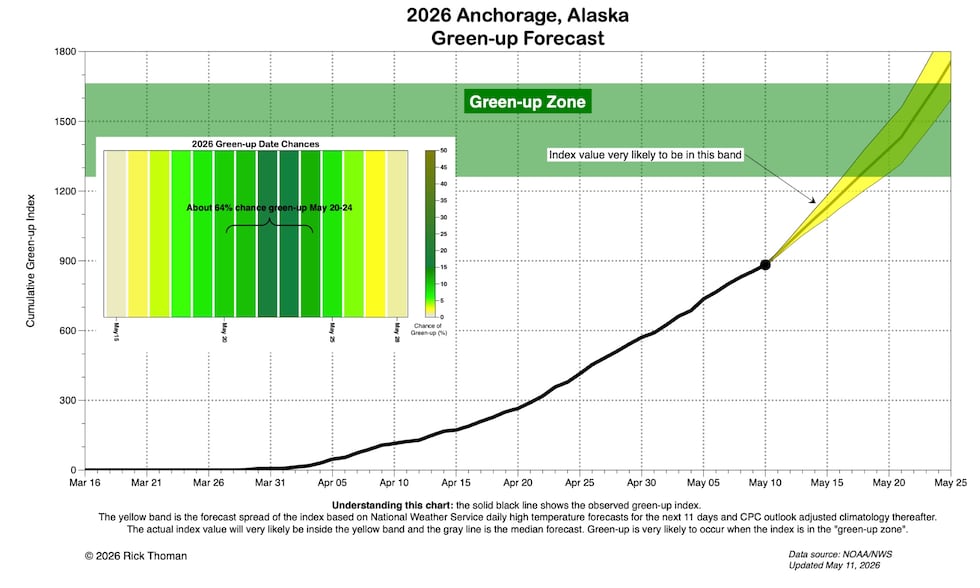
Green-up isn’t just a cause for the vibrant aesthetics of Alaska’s nature, it correlates to weather changes as well.
“Once we get the leaves on the trees, of course, it actually has a weather and climate connection, because water is evapotranspirated through those leaves into the atmosphere,” Thoman said.
“So, afternoon humidities will become higher just because you have those trees moving water from the ground up through the trees and out through the leaves. So, there’s more moisture in the atmosphere.”
As freshly bloomed trees contribute to humidity in the air, that can play a role in shower and thunderstorm development during Alaska summers. With more thunderstorm activity in the Interior, fire danger is often associated. But an early or late green-up doesn’t necessarily indicate what the severity of fire season may look like.
“Of course, an advantage of the cooler weather, wetter weather this time of year is in, of course, Southcentral during warm, dry springs, that fire danger increases pretty quickly. With the cooler and wetter weather we’ve had, [it] kind of put the brakes on that early start to the wildfire season,” Thoman said.
See a spelling or grammar error? Report it to web@ktuu.com
Copyright 2026 KTUU. All rights reserved.