After deactivating 3,000 voters, legislature’s attorney says elections division may have violated the law
ANCHORAGE, Alaska (KTUU) - Alaska’s Division of Elections may have violated both state and federal law when it deactivated more than 3,000 voter registrations over citizenship questions, the legislature’s attorney said. The legal fallout could mean hundreds of lawsuits against the state.
“There is no statute or regulation that explicitly grants the director authority to inactivate a voter’s registration based on a question about U.S. citizenship,” the attorney, Andrew Dunmire, wrote in a legal opinion to Rep. Ky Holland, NA-Anchorage.
Dunmire adds the text of state statute does not authorize the deactivation of a voter’s registration “simply based on a belief that the voter may not be a U.S. citizen.”
That’s because the threshold to remove someone from the active voter roll is quite high. Dunmire writes that the director can only deactivate a voter’s registration if they haven’t contacted the division or appeared to vote in four years, a notice was sent as undeliverable and the voter fails to respond to a second notice.
The timing of the purge may have violated federal law as well.
“Conducting systematic list maintenance at this time may violate the ‘quiet period’, required by [the National Voter Registration Act,]” Dunmire writes. “States are prohibited from carrying out systematic list maintenance to remove the names of ineligible voters within 90 days of a federal election.”
Dunmire cites several court cases that may be relevant to the issue, one interpretation of a non-binding decision (Arcia v. Florida Secretary of State) in Alaska supports “that a U.S. citizen who is erroneously removed from Alaska’s official registration list would have standing to sue the state.”
More than a fifth of the deactivated voters, 685, told the division they were citizens, Elections Director Carol Beecher told lawmakers in a letter.
“Approximately 685 voters have contacted the Division and stated they are citizens,” Beecher said in a letter obtained by Alaska’s News Source.
Before Dunmire penned his letter, dated Aug. 7, 23 members of the bipartisan majority accused her of violating the law on Aug. 4.
“We have heard from numerous citizens whose voting rights have been cancelled illegally and without just cause,” the letter from lawmakers reads. “Your actions threaten to deprive Alaskans of their most fundamental right in a democracy, and correction of your department’s mistakes should be addressed immediately.”
Holland pointed to several different statutes that he says the state violated; saying the voter qualification statute doesn’t “describe a procedure for removing someone because the Division later suspects they are not a citizen,” and the statute giving the state the ability for maintaining the voter list “does not mention citizenship investigations or authorize moving someone to inactive status simply because another agency’s records suggest they may not be a citizen.”
When asked if she would reverse the decision by the Anchorage Daily News, Beecher said “At this juncture, the plan is to keep them in inactive status for those that were identified until we hear from them.”
The director doubled down in a letter sent to lawmakers Aug. 6.
“The Division does not intend to return all recipients to active status automatically,” she wrote. “The current ‘inactive non-citizen’ status accurately identifies records requiring follow-up while preserving every eligible citizen’s ability to vote.”
Dunmire said the legal rationale for the division’s removal was key, going forward, and was something lawmakers should request of the division.
In an Aug. 6 letter to lawmakers, Beecher wrote that state and federal laws prohibit non-citizens from voting and “at the same time, state and federal laws also require the Division to keep and regularly update an accurate list of qualified, registered voters.”
Beecher has also characterized the request as routine despite yielding abnormally high numbers in its last comparison with the Department of Motor Vehicles.
Alaska’s News Source asked the division what legal authority the division had to remove the voters. Comment has not been returned as of publication.
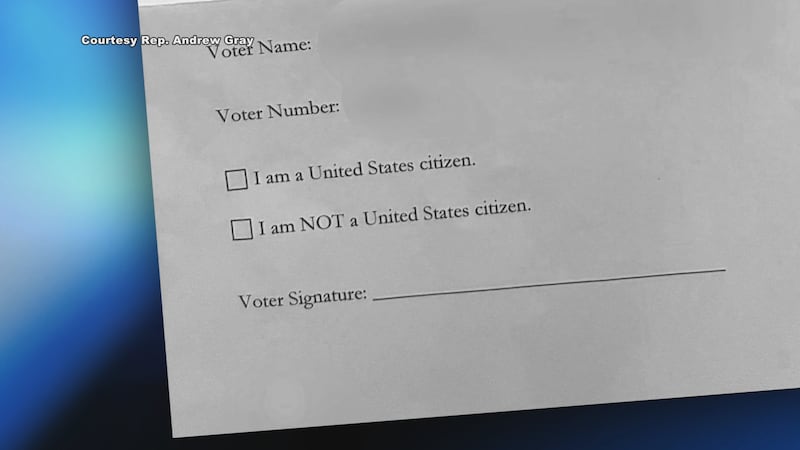
Alaska’s News Source sent a public records request on July 24 to the division asking for the letter sent to those who had their citizenship questioned, all underlying records and documents pertaining to that letter and all communications and interactions between the Alaska Division of Elections and the Alaska Department of Motor Vehicles.
On Aug. 7, Beecher returned the request with two copies of the letters sent to those questioned and nothing else, citing “portions of the records you requested are redacted” and “constitutes a partial denial.”
The voter deactivation is not the only legal controversy facing the Elections Division.
Dan J. Sullivan, a Petersburg man with the same name as the sitting US Senator, is running to take his seat. National Republican groups have accused him of trying to confuse voters, something he disputes, and ultimately was taken off the ballots.
In that case, too, Dunmire said the division likely violated the law.
The issue went to the courts, going as high as the Alaska Supreme Court, where it ruled Sullivan should remain on the ballot.
Chief Justice Susan Carney said in a hearing before the decision that a full rationale would come at a later date. More than a month later, the court still has not issued an explanation for the ruling.
When reinstated, Sullivan’s name was different (Sullivan, Daniel J. Jr.) and he had no party, despite being a registered republican in state databases. Sen. Dan Sullivan, R-Alaska, is identified as “Sullivan, Dan S.,” alongside his party (Republican) and the word “incumbent.”
Alaska’s News Source sought answers through multiple channels about how the two were distinguished from the division. Some requests were denied, while others have not received a timely response.
Alaska’s News Source asked for records showing the decision process behind the August primary ballot listings, including why Dan J. Sullivan Jr. was listed without a political party, and when and where the ballots were printed.
Alaska’s News Source has been working to obtain documents through a public records request which the division has delayed. On Aug. 7, Beecher told Alaska’s News Source it would search for emails if paid $70.06, but “the Division has since gathered about 150 records that are responsive to your request” and will “produce these in the next week or so at no charge.”
As of Tuesday afternoon, those documents still have not been sent.
See a spelling or grammar error? Report it to web@ktuu.com
Copyright 2026 KTUU. All rights reserved.