State challenges psychiatric report of Fairbanks man charged with killing grandmother
ANCHORAGE, Alaska (KTUU) - A Fairbanks judge on Friday scheduled an evidentiary hearing to decide the mental competency of a 29-year-old man charged with murdering his elderly grandmother, after prosecutors challenged a state psychiatric evaluation concluding he cannot be restored to competency.
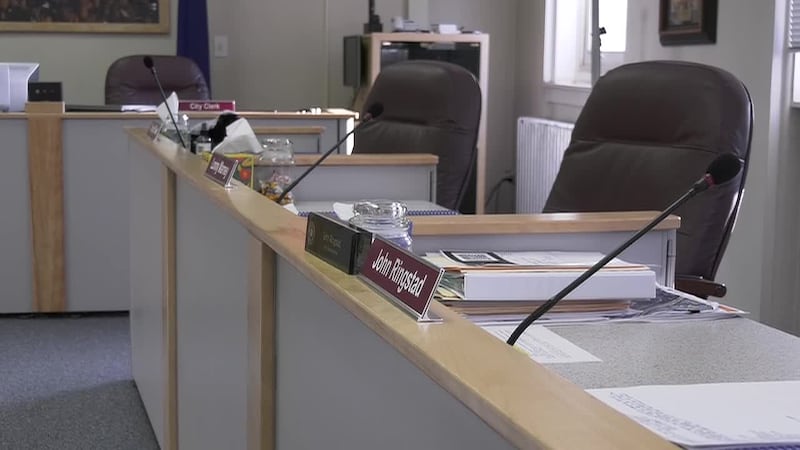
Brian Davenport, who has pleaded not guilty to first-degree murder in the Jan. 20 shooting death of 87-year-old Velma Koontz, was not present in the courtroom Friday morning.
Davenport remains hospitalized at the Alaska Psychiatric Institute in Anchorage, where his second 90-day commitment order is set to expire Oct. 7.
During Friday’s brief proceeding, the court reviewed a Sept. 30 psychiatric evaluation authored by API evaluator Dr. Christine Collins, which concluded Davenport is not mentally competent to stand trial and that there is “not a substantial likelihood that he could be restored to adjudicative competency in the foreseeable future.”
State prosecutor Kathryn Mason challenged those findings, requesting a third competency restoration period of up to six months and arguing that the hospital’s evaluation overlooked progress Davenport made on increased medication.
“The state believes that that minimizes the significant improvements he’s been making that they have in the report that he’s been making throughout his restoration period. That includes improvements due to increased antipsychotic doses,” Mason said.
“While the evaluator minimizes those improvements and labels the defendant not restorable, there appears to be an overlooking of the fact that his improvements are attributed to increased medication doses. It assumes that the current treatment is a ceiling and does not consider further adjustments, alternating medications, or additional interventions could produce continued progress.”
Defense attorney Patrick Roach pushed back, arguing that hospital staff has exhausted multiple treatment regimens with no measurable progress toward legal competency and urging the court to civilly commit Davenport under Title 47 instead.
“This is not a case where Mr. Davenport is resisting medications. The report notes that he has taken all the medications they’ve tried, and the report notes that they’ve tried multiple medications. They’ve tried multiple therapeutic regimes. They’re doing everything they can. None of them are getting to criminal competency,” Roach said.
“Months of various attempts and different medications have done nothing to move the needle on competency. And it’s just not one competency domain, it’s both. Dr. Collins notes that nothing they can do will increase his factual understanding or improve his ability to interact with staff.”
Roach pointed to an interview Davenport’s father, George Koontz, gave to Alaska’s News Source earlier this year, reminding the court that the victim’s family favored treatment over imprisonment.
“Its not that Dr. Collins is minimizing their efforts. She is saying that their efforts have produced no fruit. They are futile. And I think that really brings us to the interests of justice here,” Roach said. “His father, the son of the deceased, gave a news interview. He also spoke with me. He said he did not want his son in jail. He wanted him committed for mental health care. That’s what the court can order.”
Because the state contested the psychiatric report just days before Davenport’s commitment order expires, the judge scheduled a contested competency hearing for Monday, Oct. 5, from 3:30 to 4:30 p.m., ordering that Collins be available to testify.
The murder charges date back to the afternoon of Jan. 20, when Fairbanks police responded to a home on 22nd Avenue and found Velma Koontz dead in her wheelchair from a gunshot wound to the back of the head. Her husband told investigators he had gone to the store and returned to find his handgun outside and his wife dead.
Shortly before officers were dispatched to the home, Davenport called 911, provided an address, and remained silent on the line. Responding officers found him pacing on the roadside, displaying careless behavior that put him in danger of passing traffic, and transported him to Fairbanks Memorial Hospital under Title 47 protective custody.
When investigators linked Davenport to Koontz, he immediately confessed, telling officers he stole his grandfather’s gun and shot his grandmother. According to charging documents, Davenport admitted he had planned to kill someone else before changing his mind, comparing the shooting of his grandmother to “pulling the plug” so she could “go peacefully.” Koontz was battling terminal intestinal cancer and dementia while under hospice care at the time.
In a February interview with Alaska’s News Source, George Koontz detailed his son’s steep decade-long struggle with schizophrenia and unmedicated psychosis, saying he believed his son committed an irrational mercy killing while suffering a severe mental break.
Davenport remains in custody under a $5 million bail order. Under Alaska law, defendants are presumed innocent until proven guilty in a court of law.
See a spelling or grammar error? Report it to web@ktuu.com
Copyright 2026 KTUU. All rights reserved.