As Senate advances Trump’s $9 billion cuts, Sullivan touts Alaska radio deal while Public Media head “blindsided”
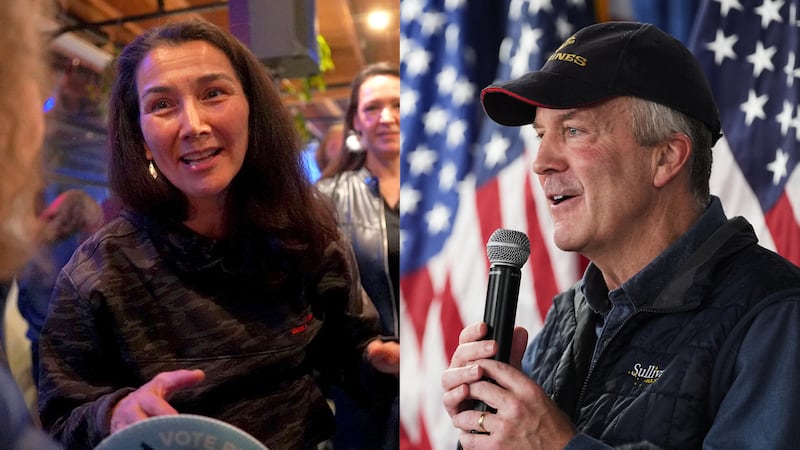
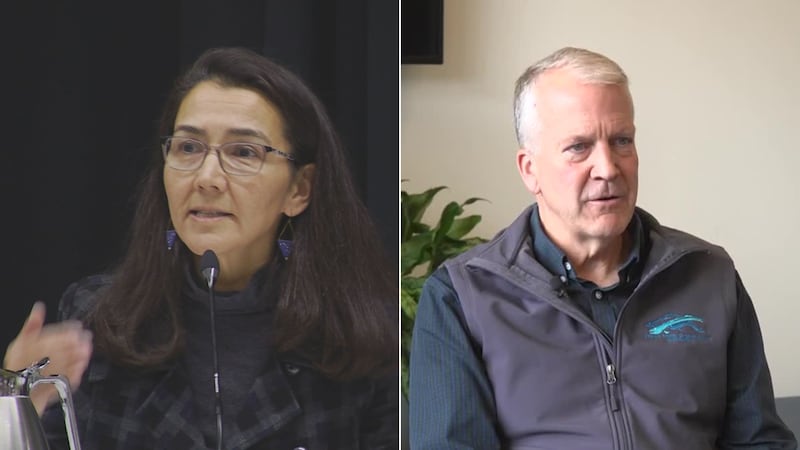
WASHINGTON (AP) — As Senate Republicans voted to move forward and debate President Donald Trump’s request to cancel some $9 billion in previously approved spending, including public broadcasting funding that has been closely watched by Alaskans, a spokesperson for Sen. Dan Sullivan, R-AK, said a last-minute deal with the White House will restore some Alaska public radio station funding.
“Because of the importance of public radio for rural Alaska, for years Senator Sullivan has been an advocate for funding for our rural stations, and has been working for the last number of weeks with his Senate colleagues and senior White House officials on alternative sources of funding to help keep rural radio stations on the air,” Sullivan’s spokesperson Amanda Coyne said in a statement. “Today, the administration committed to continued funding to help support our most rural stations.”
The statement came after Sullivan voted to move forward to have a debate over the president’s rescission bill, which includes slashing public media funding nationwide and large foreign aid cuts.
“For years, in numerous meetings, Senator Sullivan has been consistently warning executives from public media entities, the Corporation for Public Broadcasting, and NPR that their biased programming and reporting, funded in part by the American taxpayer, would eventually jeopardize federal support for both national and local radio stations,” Coyne said.
Sen. Lisa Murkowski, R-AK, was one of the few Republicans to vote against moving forward with the debate, saying she didn’t want the Senate to be going through numerous rounds of rescissions.
“We are lawmakers. We should be legislating,” Murkowski said. “What we’re getting now is a direction from the White House and being told: ‘This is the priority and we want you to execute on it. We’ll be back with you with another round.’ I don’t accept that.”
When Alaska’s News Source informed Alaska Public Media President and CEO Ed Ulman about Sullivan’s spokesperson saying a White House deal had been reached, Ulman said he was “blindsided.”
“The most succinct thing I could say is that it’s an interconnected system in terms of how we distribute content, how we produce local content,” Ulman said. “While this may seem like a fine political stopgap, it will still lead to a lot of stations in Alaska not being able to provide local content.”
Ulman said Alaska stands to lose more than $30 million in federal funding over the next two years, if this bill is passed.
Senate debate
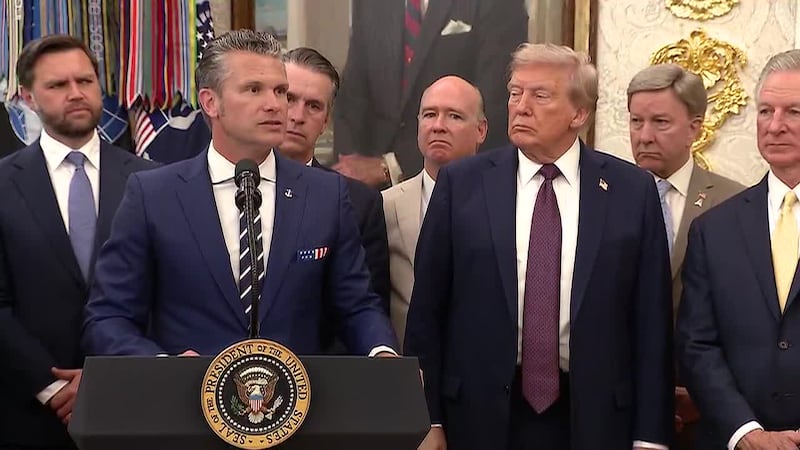
The Senate vote was 50-50, with Vice President JD Vance breaking the tie, overcoming concerns from some lawmakers about what the rescissions could mean for impoverished people around the globe and for public radio and television stations in their home states.
A final vote in the Senate could occur as early as Wednesday. The bill would then return to the House for another vote before it would go to Trump’s desk for his signature before a Friday deadline.
Republicans winnowed down the president’s request by taking out his proposed $400 million cut to a program known as PEPFAR. That change increased the prospects for the bill’s passage. The politically popular program is credited with saving millions of lives since its creation under then-President George W. Bush to combat HIV/AIDS.
The president is also looking to claw back money for foreign aid programs targeted by his Department of Government Efficiency and for the Corporation for Public Broadcasting.
“When you’ve got a $36 trillion debt, we have to do something to get spending under control,” said Senate Majority Leader John Thune, R-S.D.
The White House tries to win over skeptics
Republicans met with Russ Vought, the director of the White House Office of Management and Budget, during their weekly conference luncheon as the White House worked to address their concerns. He fielded about 20 questions from senators.
The White House campaign to win over potential holdouts had some success. Sen. Mike Rounds, R-S.D., tweeted that he would vote to support the measure after working with the administration to “find Green New Deal money that could be reallocated to continue grants to tribal radio stations without interruption.”
Some senators worried that the cuts to public media could decimate many of the 1,500 local radio and television stations around the country that rely on some federal funding to operate. The Corporation for Public Broadcasting distributes more than 70% of its funding to those stations.
Sen. Susan Collins, R-ME, the Republican chair of the Senate Appropriations Committee, said she was particularly concerned about a lack of specifics from the White House.
“The rescissions package has a big problem — nobody really knows what program reductions are in it," Collins said. “That isn’t because we haven’t had time to review the bill. Instead, the problem is that OMB has never provided the details that would normally be part of this process.”
Sen. Mitch McConnell, R-KY, Collins and Murkowski joined with Democrats in voting against the Senate taking up the measure.
McConnell said he wanted to make clear he didn’t have any problem with reducing spending, but agreed with Collins that lawmakers didn’t have enough details from the White House.
“They would like a blank check is what they would like and I don’t think that’s appropriate,” McConnell said.
But the large majority of Republicans were supportive of Trump’s request.
“This bill is a first step in a long but necessary fight to put our nation’s fiscal house in order,” said Sen. Eric Schmitt, R-MO.
Democrats warn of the consequences
Democrats warned that it’s absurd to expect them to work with Republicans on bipartisan spending measures if Republicans turn around a few months later and use their majority to cut the parts they don’t like.
“It shreds the appropriations process,” said Sen. Angus King, I-ME, who caucuses with Democrats. “The Appropriations Committee, and indeed this body, becomes a rubber stamp for whatever the administration wants.”
Democratic leader Chuck Schumer, D-NY, said tens of millions of Americans rely on local public radio and television stations for local news, weather alerts and educational programs. He warned many could lose access to that information because of the rescissions.
“And these cuts couldn’t come at a worse time,” Schumer said. “The floods in Texas remind us that speedy alerts and up-to-the-minute forecasts can mean the difference between life and death.”
Democrats also scoffed at the GOP’s stated motivation for taking up the bill. The amount of savings pales compared to the $3.4 trillion in projected deficits over the next decade that Republicans put in motion in passing Trump’s big tax and spending cut bill two weeks ago.
“Now, Republicans are pretending they are concerned about the debt,” said Sen. Patty Murray, D-WA. “So concerned that they need to shut down local radio stations, so concerned they are going to cut off ‘Sesame Street.’ ... The idea that that is about balancing the debt is laughable.”
What’s ahead in the Senate
With Republicans providing enough votes to take up the bill, it sets up the potential for 10 hours of debate plus votes on scores of potentially thorny amendments in what is known as a vote-a-rama. The House has already shown its support for the president’s request with a mostly party-line 214-212 vote, but since the Senate is amending the bill, it will have to go back to the House for another vote.
Republicans who vote against the measure also face the prospect of incurring Trump’s wrath. He has issued a warning on his social media site directly aimed at individual Senate Republicans who may be considering voting against the rescissions package. He said it was important that all Republicans adhere to the bill and in particular defund the Corporation for Public Broadcasting.
“Any Republican that votes to allow this monstrosity to continue broadcasting will not have my support or Endorsement,” he said.
Editor’s Note: Alaska’s News Source contributed to this Associated Press article.
Copyright 2025 The Associated Press. All rights reserved.