Public media supporters say federal funding cuts could endanger life-saving broadcasts in Alaska
ANCHORAGE, Alaska (KTUU) - Federal lawmakers on Thursday approved a large portion of President Donald Trump’s request for cuts in the rarely-used process of rescissions, removing nearly $9 billion in funding for efforts such as foreign aid and public broadcasting.
The evening vote of 216-213 in the House followed a previous late-night session for Senate lawmakers who approved the measure in a 51-48 vote earlier the same day.
Many have maintained that the cuts - in general - are necessary, though there has been widespread outcry over reducing funding for public broadcasting, particularly in Alaska. For some, the concern about the potential impacts of any changes to funding for public broadcasting seem to be heightened in the immediate aftermath of a preliminary magnitude-7.3 earthquake that struck near Sand Point on Wednesday.
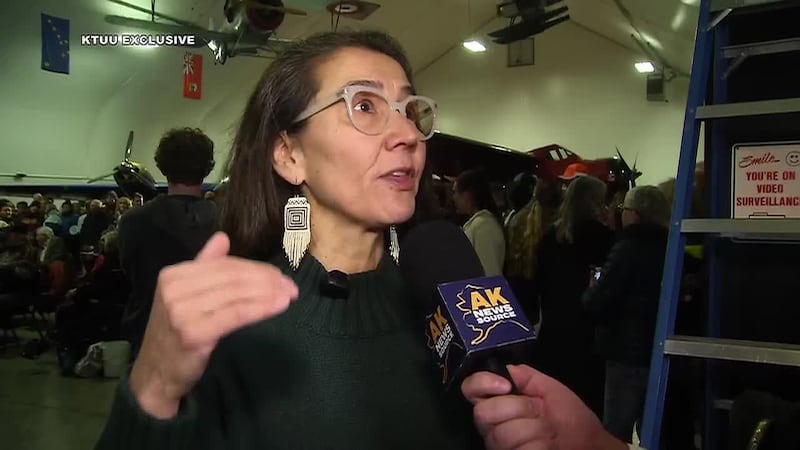
Lauren Adams, KUCB – Unalaska’s only local news outlet – general manager, said before the House vote Thursday she was making sandwiches for her kids when the earthquake hit off the coast.
“I dropped that, and ran to my office,” Adams said. “As the sirens rang through the 4,000-person community, the voice over the intercom instructed community members to tune in to the local radio,” she said.
“Immediately, I started thinking about, ‘This is why we’re important,’” she said. “That was in my head, because I’ve been thinking about the funding debate going on and I felt like, ‘Boy, this timing is crazy.’”
As KUCB went on the air, Senate lawmakers in Washington, D.C. were then in the middle of debating whether stations like theirs should or should not receive funding. Last night, after the earthquake, those lawmakers voted to remove their funding, passed next day by the House, setting it up to be signed by the president.
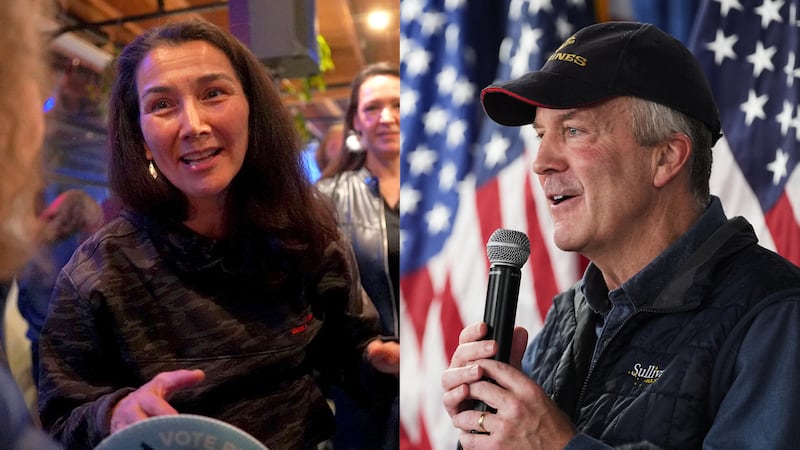
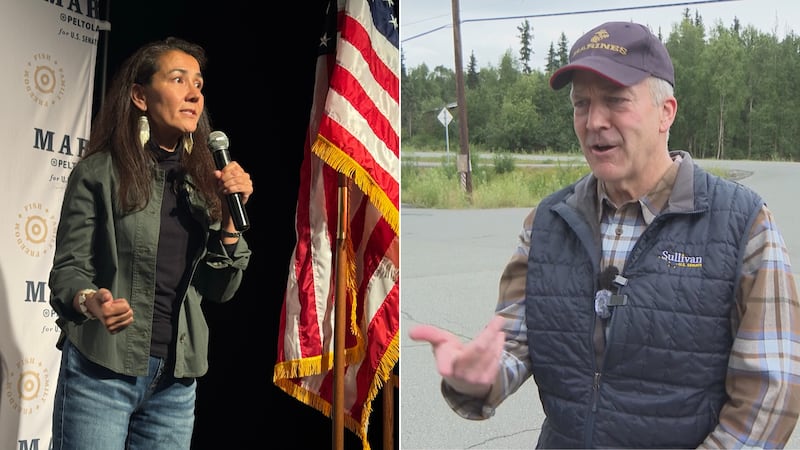
Sen. Dan Sullivan, R-Alaska, voted in favor of the rescissions package. Sen. Lisa Murkowski, R-Alaska, was one of two republicans who voted against it.
This wasn’t the first time KUCB has been dealt a funding blow, Adams said, explaining she has had to make cuts over the last few years due to changing and reduced funding streams.
It’s led the newsroom to be slimmed down, she said, with the outlet now staffed by just three people.
Theo Greenly, who reported on Wednesday’s tsunami warning, said it’s an impossible job and compared to some other local stations, their station had it relatively easy.
“When I’m in Sand Point or in Saint Paul and the Pribilofs, I am the only reporter, and that’s not rare around the state,” he said. “We have one-person newsrooms down in Wrangell, up in Kotzebue. All over there are reporters who are single-handedly covering entire regions.”
Greenly was at his home when he noticed a large earthquake was hitting, his house began to shake. As soon as it subsided, he went down to the station to start reporting from their station located at sea level.
“It’s not right on the coast, but it’s very close,” he reflected. “It was in the tsunami zone for sure, but there’s usually an hour or something before the projected wave is supposed to hit.
“To be honest, it’s kind of standard issue around here,” he added. “The radio station is integral to the emergency response.”
Once the tide began to settle and the warning officially dissipated, Adams went to her computer to send an email to the congressional delegation.
“‘Dear Sen. Sullivan,’” she wrote. “‘I am writing following a community evacuation of Unalaska that took place due to a tsunami warning. It’s fitting that this would take place on the day that senators are making decisions about the future of public media funding.’”
With a new wave of cuts from the rescissions bill, Adams said this tide could be the one that takes her station – as well as others across Alaska and the country as a whole – off the map.
Alaska’s News Source reached out to all members of the state’s Congressional delegation on Thursday. A spokesperson for Sullivan said he was busy all week. Murkowski and Rep. Nick Begich, R-Alaska, did not respond to requests for comment.
“Some colleagues claim they are targeting ‘radical leftist organizations,’ with these cuts, but in Alaska, these are simply organizations dedicated to their communities,” Murkowski said on social media. “Their response to today’s earthquake is a perfect example of the incredible public service these stations provide. They deliver local news, weather updates and yes, emergency alerts that save human lives.”
When Adams got back home, she said the events of the day didn’t leave her – not because of the work done in the aftermath, but because of worry over the ability to do it again next year, when they could be down some $290,000.
“I was up most of the night thinking about that,” Adams said. “There is no way to fill that gap for KUCB. Losing that large of a chunk of our budget is not going to allow for us to keep our current levels of service.”
Alaska Public Media CEO and President Ed Ulman told Alaska’s News Source Wednesday the state stands to lose $30 million in funding
“I’ve lived here for 9 years and we rely on these 27 public media outlets across our entire state and it’s going to be difficult to replace them,” he said Wednesday. “Once they go dark, they’ll be dark forever.”
Sullivan’s side-line deal
Alaska’s Senate delegation – and ultimately, the Senate as a whole – was split on the rescissions package Wednesday, but Alaska’s News Source reported Sullivan attempted to work a deal with the White House to restore some funding that would be cut from the bill.
Sullivan’s spokesperson Amanda Coyne told Alaska’s News Source Thursday “approximately $10 million available for tribal and Native stations in the country.”
Ulman worried that this deal, which so far appears to just be a promise between the White House and lawmakers, may not even apply to Alaska stations. The deal did not appear in the form of an amendment to the bill and there’s been no word of it popping up as another form of legislation.
“As I understand it, there are no officially recognized ‘tribal’ stations in Alaska,” Alaska Public Media President and CEO Ed Ulman told Alaska’s News Source Wednesday. “Only Koahnic Broadcasting Corporation, which operates KNBA, is owned and operated by Alaska Natives.”
Sen. Mike Rounds, R-South Dakota, reportedly also helped negotiate a deal with the Trump Administration and said on social media the funding would come from cut programs in the Green New Deal.
“We wanted to make sure tribal broadcast services in South Dakota continued to operate, which provide potentially lifesaving emergency alerts,” he said. “We worked with the Trump administration to find Green New Deal money that could be reallocated to continue grants to tribal radio stations without interruption.”
Coyne said the state has 11 Native stations but did not say whether all 11 would qualify as part of this fund.
Kate Riley, America’s Public Television Stations President and CEO, said Wednesday the $10 million fund would not only be divided amongst 28 stations across the country, but would also be a one-time check.
Coyne said Sullivan discussed the funding issue with “a senior administration official [Thursday] morning” to discuss “working to provide resources to support as many Alaska rural radio stations as possible.”
The House decides
Begich, voted for the initial version of the bill prior to the Senate amending the bill. In a press release following his initial vote, not Thursday’s vote, he said the funds don’t support 21st-century potential.
“Alaskan residents have embraced today’s pervasive cellular, satellite and wireline technologies, connecting rural communities to critical information and resources in rich and compelling ways,” he said. “Importantly, however, emergency management funding from these budgets that is directed to rural communities has been preserved.”
Alaska’s News Source reached out to Begich’s office but was denied an interview.
In her email to the delegation, Adams referenced why radio could serve Alaskans when the internet may not. Currently, parts of the North Slope are without reliable internet access.
“Throughout the [tsunami warning], local internet was spotty and residents relied on us. Our on-air work also allowed public safety officials to do their jobs without being inundated with phone calls from the public,” she said. “This is the work that we do to keep Unalaska safe, and it’s only possible with federal funding. I hope that you will work with your colleagues to secure funding for rural radio in Alaska - it’s still necessary.”
See a spelling or grammatical error? Report it to web@ktuu.com
Copyright 2025 KTUU. All rights reserved.