Alaska man sentenced to nearly six years in prison in federal child sexual abuse material case
ANCHORAGE, Alaska (KTUU) - A man convicted in a federal child pornography case was sentenced Wednesday to nearly six years in prison and two decades of supervised release, after repeatedly interrupting the proceedings with outbursts from the courtroom.
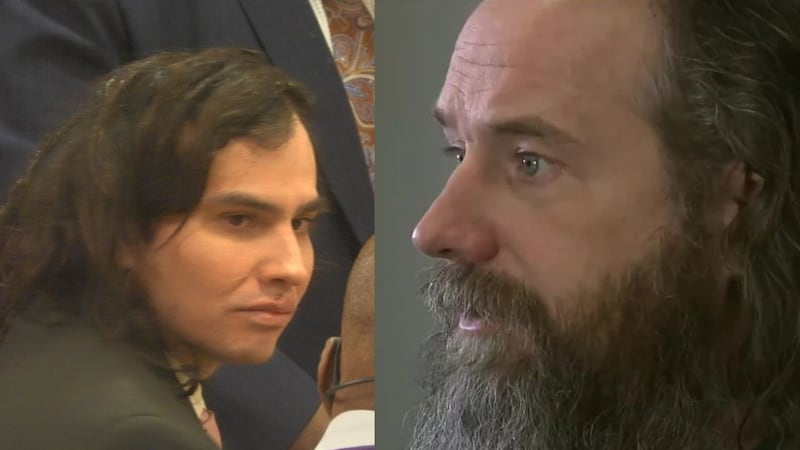
Anthaney O’Connor, 32, of Anchorage, was sentenced to 70 months in federal prison followed by 20 years of supervised release after pleading guilty to one count of receipt of child pornography, also known as child sexual abuse material, or CSAM, according to the U.S. Justice Department.
During the hearing, O’Connor, who was in custody, had multiple outbursts, speaking out of turn. He said, “I haven’t exploited anyone,” and “I did not distribute anything,” and “There are no victims.”
At one point, he also called the court “ignorant.” When told to wait his turn, he responded: “I’m saying it now.” At another point, he said, “Awesome, illegal sanctions, violation of constitutional rights.”
As part of a plea agreement filed in the U.S. District Court for Alaska, prosecutors agreed to move to dismiss the charges of distributing and possessing child pornography.
The plea agreement included a recommended sentence of 60 to 70 months and supervised release of no less than 20 years.
O’Connor pleaded guilty on July 31, 2025, according to the Justice Department.
O’Connor received CSAM from another offender who was an active-duty Airman stationed at Joint Base Elmendorf-Richardson, and the material included images depicting prepubescent children. The two also planned to view CSAM together using a virtual reality system, the release said. In stored messages with the other offender, O’Connor said he could use images of real children and make them sexually explicit for use in the system, enabling a virtual simulation, according to the Justice Department.
The Justice Department said O’Connor also distributed CSAM to other individuals and possessed multiple images of obscene visual depictions of child sexual abuse of children created by artificial intelligence.
In the plea agreement’s factual basis, prosecutors said that in August 2024, O’Connor received two images of child sexual abuse material on his cellphone via text message and via Telegram. The plea agreement also says that during a Dec. 19, 2024, interview, O’Connor told investigators he mainly downloaded AI-generated CSAM images, but said he also downloaded “real” CSAM at times, and said he would distribute it via text messages to friends.
Assistant Attorney General A. Tysen Duva said in a press release that O’Connor “not only received, consumed, and distributed depraved images depicting sexual abuse of young children, but actively collaborated to view the material in virtual reality,” adding that AI used in this way “adds a new element to child sexual abuse crimes.”
U.S. Attorney Michael J. Heyman for the District of Alaska said in the release that protecting children and dismantling the industry behind CSAM is a top priority, and that the case is part of the office’s efforts to stop the conduct.
Special Agent in Charge Matthew Schlegel of the FBI Anchorage Field Office said in the release that O’Connor’s possession of real and AI-generated CSAM was “alarming” and “abhorrent,” and that authorities will continue working to hold offenders accountable.
The Justice Department said the case was brought as part of Project Safe Childhood, a nationwide initiative launched in 2006 to combat child sexual exploitation and abuse.
See a spelling or grammar error? Report it to web@ktuu.com
Copyright 2026 KTUU. All rights reserved.