Tuition policy, AI usage discussed at UA Board of Regents meeting
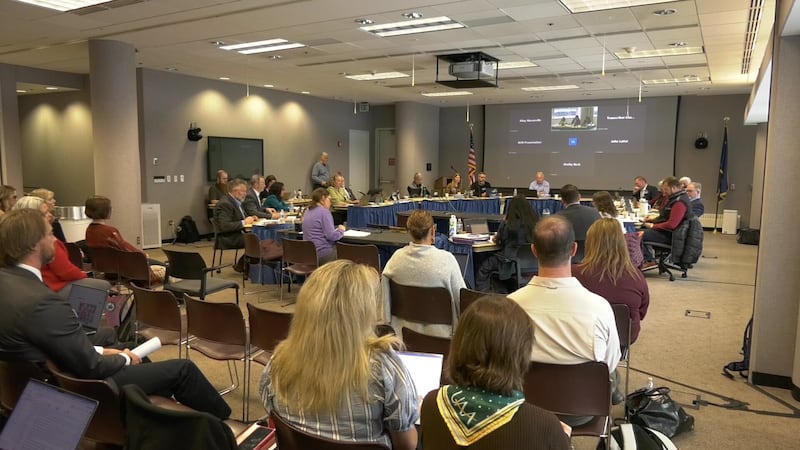
FAIRBANKS, Alaska (KTUU/KTVF) - The University of Alaska Board of Regents held a series of meetings at the Butrovich Building on the Troth Yeddha’ campus in Fairbanks this week discussing a variety of topics, including a new structure for tuition throughout the Alaska university system and guidance on the use of AI.
Regents are also expected to approve operating and capital budgets and set tuition rates for fiscal year 2028 at the November meeting.
According to Jonathon Taylor, Director of Public Affairs with the UA system, the board on Friday unanimously approved moving to a new system for setting tuition rates, called program-based tuition.
“Each individual program for each individual university can have its own rate,” he explained, adding that these rates will be determined in consultation with a program’s faculty and department leadership who may request that the board consider a certain tuition rate based on their needs.
“There’s justification and rationale that they provide that explains why they believe that rate is needed,” Taylor described, “and it’s vetted by those academic units as well as the provost and the Vice Chancellor for Administrative Services at the university before going to that university’s chancellor, and if there’s consensus there, it’ll go to the board and the president to consider.”
Currently, tuition for courses in each program at a given university is about the same, with differences in tuition being seen between upper- and lower-division courses.
When a program is more expensive to run, these costs are made up by attached student fees, whereas under the new model, these extra expenses will be reflected in tuition.
“That’s an important distinction because some financial aid dollars only apply to tuition. They don’t apply to fees,” Taylor explained, “so by rolling those surcharges into tuition, students will be able to use more of that tuition-specific financial aid for their courses.”
Taylor said the newly-approved system will make it easier for students to determine how much their degree will ultimately cost when planning their course of study.
“For example, if you are an engineering student and you decide that you want to major in engineering, you’ll be able to predict what your cost of attendance is likely to be over the course of that degree,” he explained.
The goal of this change, Taylor claimed, is to make finances more predictable for students and their families.
“That will make student bills clearer, make it easier for folks to understand the cost of attendance, and as a part of our tuition transparency initiative that’s been ongoing for a little over a year to try to help make tuition clearer and more easy to understand for students,” he explained.
As for FY28, the board approved new tuition rates Friday, with students at the University of Alaska Fairbanks seeing between a 0% and 1% increase.
Meanwhile, the board voted in August to eliminate tuition surcharges for students who are not Alaska residents.
“Everybody beginning next fall will be paying the resident tuition rate,” Taylor said. “We won’t have a different rate for folks from out of state, and that’s to help with some out-of-state recruitment.”
See a spelling or grammar error? Report it to web@ktuu.com
Copyright 2026 KTUU. All rights reserved.