Audit finds over 3,000 Alaskan rape kits not tested

(App users, to view the interactive data visualization, follow this
).
Data is sourced from an Alaska Department of Public Safety
, which was drafted in November 2017. The audit shows the backlog of untested sexual assault kits (SAK) in Alaska, since the year 2000 to August of 2017.
According to Alaska DPS, statewide data was submitted by 46 of 49 agencies. Of the 3,484 total SAKs inventoried, the seven largest agencies were in possession of 3,219 SAKs. Use the data visualization, above, to further explore this data.
A recently released
shows 3,484 sexual assault kits (SAK), taken as evidence by law enforcement agencies, were
submitted for serological testing at a laboratory in Alaska.
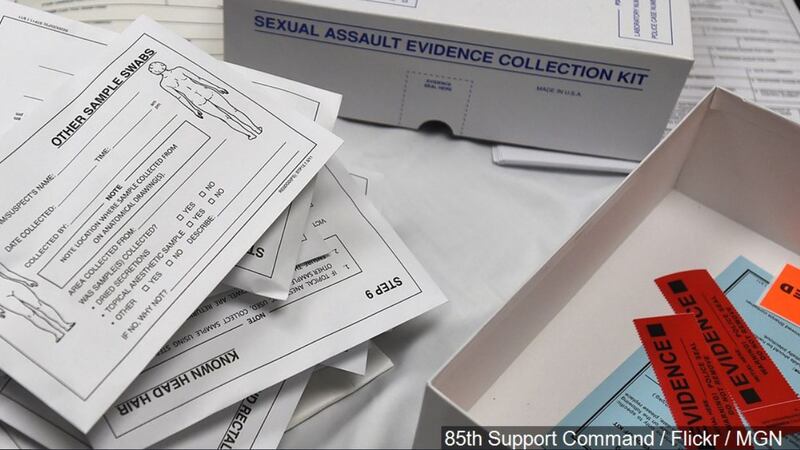
The State of Alaska's Department of Public Safety said the kits are used by medical personnel and trained professionals for the preservation of physical evidence collected from a person, living or deceased, following an allegation or suspicion of sexual assault.
The kits can come in packaged boxes, bags or individual swabs.
According to Alaska DPS, a statewide inventory of untested sexual assault kits – dating back to the year 2000 – was performed as a result of SB-55, which passed in 2017.
Results indicate that the state's seven largest agencies were in possession of approximately 92 percent of these kits.
Among the SAKs
submitted for testing: 53 percent were with the Anchorage Police Department, 22 percent were with Alaska State Troopers, 6 percent were with the Juneau Police Department, 5 percent were with the Fairbanks Police Department and 2 percent each were with the Ketchikan Police Department, Nome Police Department and North Slope Police Department. According to the Alaska DPS, the remaining 8 percent of SAKs were in the possession of all other municipal or tribal police departments.
Additionally, the department said some of the most common reasons why SAKs are
tested, include:
- The District Attorney's Office declined the case.
- Authorities were awaiting a decision from the DA's Office on whether the kit results were needed for evidence.
- A case is still under investigation.
- The issue involved consent, not assailant identity.
- The evidence collected was beyond the testing time frame.
Within the report, results show that 2,979 kits came from a victim, 114 were from an anonymous victim and 391 were from a suspect.
Starting in January 2018, the department stated that all newly collected SAKs will be sent to the State Scientific Crime Detection Laboratory for testing or storage.
Alaska DPS wrote its plans to address untested kits and other testing options, by developing a testing policy based on recommendations from the Sexual Assault Kit Initiative working group.
The department received a grant under the federal SAK initiative program last year.
A document said applying a "test all" policy to newly collected kits will require an additional $204,000 for personnel costs, and $250,000 in chemicals and testing supplies. Overall, the total annual cost is estimated at $454,000.
Alaska DPS said the estimated cost of testing all previously untested kits, at a private lab, would cost between $2.2 million and $3 million.
A final report of recommendations is expected by June 30, 2019.