Public Media Cuts: Valdez station’s challenges reflect impact seen across dozens of remote communities
Public media station leaders & supporters worry about the ability to provide essential services
This story is part of Alaska’s News Source ongoing investigative series called ‘The Impact,’ examining how political decisions impact Alaskans.
VALDEZ, Alaska (KTUU) - Two months after Congress eliminated public media funding nationwide, KCHU in Valdez - which has been broadcasting to seven rural communities for decades - faces an uncertain future after losing both its federal budget and its AM tower to erosion. The station represents the crisis public media leaders say they are now confronting at Alaska’s 27 public media stations that have historically served as the state’s vital information lifeline for emergency communications, weather alerts, and local news.
The struggle playing out in this remote community of about 3,800 residents, illustrates a broader political battle between those who argue these cuts were necessary to stop taxpayer funding of “biased” information, and supporters who contend these stations provide essential services that commercial media cannot reach in Alaska’s unique geography, where they say public broadcasting often represents the only reliable communication link to the outside world.
“This is probably the most difficult set of circumstances that’s ever happened to KCHU,” said station director James Devens, who has served for the past five years and started with the station at age 12 as an intern.
“This has been an institution in our community for my entire life.”
A PERFECT STORM OF CHALLENGES
Devens has witnessed many changes over the years, but he says nothing has been as devastating as the combination of losing the station’s AM tower in August due to what he called long-unforeseen erosion and the elimination of federal funding.
“That’s the most tragic part about this—so much community support and outpouring happened to try to rescue this tower,” Devens said. “We had an enormous explosion of contributions from community members who donated specifically to this cause, and local contractors volunteered their time and equipment. The municipality donated materials to build a diversion dike, and the Army Corps of Engineers fast-tracked our permitting process at a rate I’ve never seen before. We completed the work and thought we had succeeded.”
Despite what many locals say they consider a heroic community effort, the tower ultimately could not be saved. Devens said that it eliminated KCHU’s ability to reach maritime vessels and remote areas that rely on AM signals to penetrate Alaska’s challenging terrain.
“The tower going down is like the knife in the coffin,” said longtime Valdez resident and KCHU listener Gigi Obren. “I texted Jimmy when the tower went down and he texted back, ‘this is one of the worst days of my life.’”
For Gigi and her husband, Larry Kelone, they say public radio is more about reliable local information, it’s about connection.
“Local public radio has been the background of my life for 40 years,” Obren said. “These are my people telling me about my state and we all love it here. There’s an Alaskan connection.”
FEDERAL FUNDING ELIMINATED STATEWIDE
The tower loss coincided with Congress voting to cut all public media stations’ federal funding. Devens said at KCHU the passage of the Rescission Act of 2025 translates to $160,000— representing just a fraction of the statewide impact: Alaska’s 27 public broadcasting stations collectively lost about $15 million in federal support, according to President & CEO of Alaska Public Media Ed Ulman.
The federal cuts, according to Devens, are compounded by continued state vetoes and around the same time, the Corporation for Public Broadcasting ended a grant program that many stations across the state had relied on for making vital upgrades to emergency warning systems.
“Because the program has been cancelled and our funding has been cut, the chances that we’ll be able to make those upgrades in the near future is essentially zero,” Devens said.
He said the station was counting on a $100,000 grant the CPB had awarded to specifically strengthen broadcast security for all the rural communities that have counted on KCHU for decades to stay informed about local events and emergencies.
HISTORICAL LIFELINE: THE EXXON VALDEZ LEGACY
Many Valdez locals say the importance of this emergency communication system was seen as a vital example during the 1989 Exxon Valdez oil spill, one of the world’s worst environmental catastrophes. Devens said the AM tower was erected in 1990 as a direct response to the spill, when the community realized how critical reliable communication was during disasters.
While no tower existed at the time of the spill, Devens emphasized how KCHU was still one of the first stations in the world to report on the disaster.
“When the Exxon Valdez hit the ground at Bligh Reef, there were mariners nearby who immediately got on the radio and said, ‘You’re not going to believe what just happened,’” Devens said. “They were reporting it live while talking to fishermen or shippers or whoever on the CB radio.”
That historical connection makes balancing the current funding loss particularly poignant for Valdez residents, who emphasize how they understand firsthand how public media can serve as a lifeline during emergencies.
“I’ve lived here about 45 years. It’s a dependable station for Prince William Sound,” said Kelone.
Kelone was living in Valdez at the time of the spill and remembers the devastating effects all too well.
“That was not a good thing, you know, like it was a complete surprise,” Kelone said about the tower coming down. “We depend on that radio station for a lot of these things. It does all the announcements for the local news, all the local events. I depend on it mainly for weather.”
STATEWIDE CUTS IMPACT RURAL ALASKA
Valdez’s struggles mirror challenges facing public broadcasting stations across Alaska’s vast landscape. The Rescissions Act of 2025, passed in July, imposed federal funding cuts totaling $1.1 billion nationwide for public broadcasting.
Other stations, such as KTOO in Juneau—a city and borough whose residents have recently navigated consecutive years of flooding, face similar challenges. KTOO President and General Manager Justin Shoman said in addition to losing federal dollars, he’s worried whether the station will ever be reimbursed $18,000 used as part of the CPB grant program to make emergency upgrades.
Shoman said that for a community experiencing what now seems to be annual glacial flooding, having a reliable hyperlocal source to count on when internet and phone lines go down is crucial.
“The fact of the matter is we don’t know if we’re going to be able to provide that same level of coverage a year from now because we’re going to have to fight through this funding reality,” Shoman said.
“It’s not just the alert—but then it’s also where do we go for information and where do we go for context to keep us safe throughout an event. Because an alert, it’s a one time, it goes out, people are warned, its incredibly important, but from there, they’re directed to tune into a local broadcast station. In many communities, that’s public media, and if they go away, there’s just going to be no source of information.”
OPPONENTS CALL PUBLIC MEDIA ‘BIASED’ INFORMATION
The funding cuts reflect a broader national political debate over the role of public media. As Republicans eliminated CPB funding this summer, supporters of the cut, including President Donald Trump, have accused NPR and PBS of using taxpayer dollars for biased content.
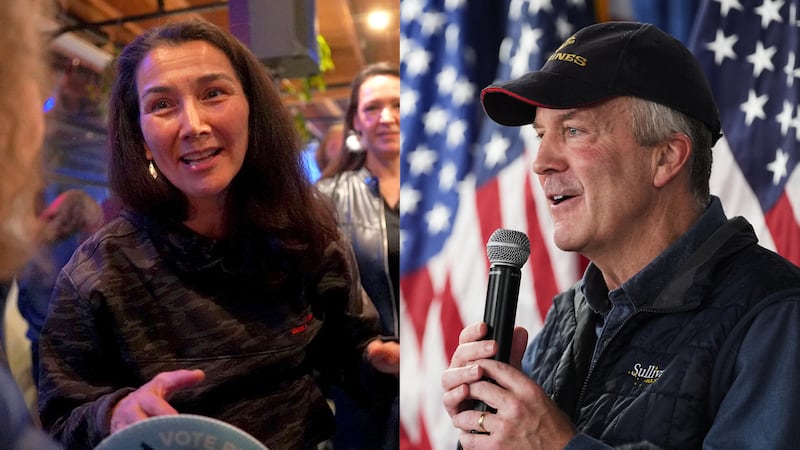
Alaska’s Republican congressional delegation split on the issue. While Sen. Lisa Murkowski opposed the cuts, Rep. Nick Begich and Sen. Dan Sullivan supported them.
“For years, in numerous meetings, Senator Sullivan has consistently warned executives from public media entities, the Corporation for Public Broadcasting, and NPR that their biased programming and reporting, funded in part by the American taxpayer, would eventually jeopardize federal support for both national and local radio stations,” Sullivan spokesperson Amanda Coyne said in a statement at the time the Congress passed the cuts.
SUPPORTERS SAY THEY’RE DEFENDING PUBLIC SERVICE
But Devens strongly disagrees with characterizations of bias and argues that critics miss the fundamental purpose of stations like Valdez’s KCHU. He contends public radio functions less as a business and more as essential infrastructure connecting communities.
“Not everything can be a profitable enterprise,” Devens said. “There are some things that exist solely as a service to the public.”
“It’s not a business enterprise—it’s a public service. The connectivity of these communities culturally and spiritually, and in their ability to receive important news and updates and to be connected to one another through public radio, to me, is almost as important as being physically connected by the highway system.”
For communities like those served by KCHU—scattered across an area larger than some states, accessible only by boat or plane, and often cut off from internet and cellular service—this argument, supporters say, carries particular weight. In Alaska’s unique geography, to those communities, public media often represents the only reliable communication link to the outside world.
As the political battle over public media funding continues in Washington, stations like KCHU find themselves fighting for survival while trying to maintain the essential services their communities have depended on for decades.
See a spelling or grammar error? Report it to web@ktuu.com
Copyright 2025 KTUU. All rights reserved.