Public Media Cuts: State nonprofit raises $3.5 million to fill stations’ federal funding gap
Voices Across Alaska‘s ‘rapid response fund’ set for first distribution in October
ANCHORAGE, Alaska (KTUU) - Leaders from the state nonprofit Alaska Community Foundation said in October they will begin distributing millions raised to Alaska’s 27 public media stations to help fill the gap created after Congress slashed public media funding two months ago.
When Congress cut $1.1 billion in Corporation for Public Broadcasting funding, which later led to the corporation’s shut down, state leaders say it reduced half or more of the needed revenue for local stations to exist in Alaska.
″It’s a 20% cut to Alaska Public media’s operational budget. How do you run your household If you took a 20% pay cut," Alaska Public Radio President Ed Ulman previously told Alaska’s News Source, describing the cut’s effect in Alaska. “Any type of cut that’s 50% or higher to an annual budget. You’re not the same organization and you can’t cut half of your operation and continue to really thrive.”
Though public media’s main revenue source was cut, Alaska Community Foundation leaders said they hope to keep the state’s public media stations on air by creating a pooled fund called Voices Across Alaska - which collects donations from individuals, corporations and foundations.
Communications Director for ACF Ashley Ellingson confirmed Friday the fund had raised more than $3.5 million dollars from more than 80 donors inside and outside the state - funding aimed towards filling the annual $15 million dollar loss the federal funding cuts created.
“We know that a lot of our local TV and radio stations don’t have large enough public media stations, don’t have large enough local audiences to be able to fundraise for their own station (because of) the gap that was created by CPB defunding,” Megan Cacciola, vice president of Programs & Grants at the ACF told Alaska’s News Source Thursday.
“Given that they’re too small to be able to meet the fundraising need, there needed to be a collective response across the state,” Cacciola added.
These impacts are already visible across Alaska’s remote stations, including KCHU in Valdez, where the station director said a $160,000 funding loss combined with infrastructure challenges threatens to eliminate the only reliable communication link for seven rural communities.
“This is probably the most difficult set of circumstances that’s ever happened to KCHU,” said station director James Devens, who has served for the past five years and started with the station at age 12 as an intern.
Since being formed in August, Cacciola said the Voices Across Alaska Fund’s goal has been to equitably distribute private and corporation donations to the Alaska stations most in need of funding.
“If we raised four months worth of funding for all of the stations that we would try to make sure that every station was going to be good for four months,” Cacciola said.
Several details are taken into account, Cacciola said, before the exact amount is delivered to those stations, including: understanding a station’s local fundraising, national fundraising efforts (like the Bridge Fund, created by the Public Media Company to fund public media stations “with an early focus on rural and underserved communities where public media organizations face the greatest risks,”), and historic reliance on CPB funding.
“The only stations that would not receive funding under that category would be those that have already locally fundraised enough to meet that four-month period,” Cacciola said, adding stations are due to receive the first wave of funding in October.
Though the fund exists now, Alexandra McKay, president and CEO of ACF, told Alaska’s News Source its existence was going to remain fluid.
“We know that there are going to need to be changes in how we support public media in Alaska (and) this is really a rapid response fund, because we really want to keep ... the stations going, and that gives us a runway for us to be able to plan and the leaders (of public media stations) be able to plan on what is next and what will this look like,” she said.
Despite the move coming from the government to eliminate the spending, for what supporters of the cuts including Sen. Dan Sullivan has, in part, described as biased reporting, McKay said the choice was not one politically motivated.
“We don’t see this as a political crossroad,” she said. “We really just see this as a need in the state.”
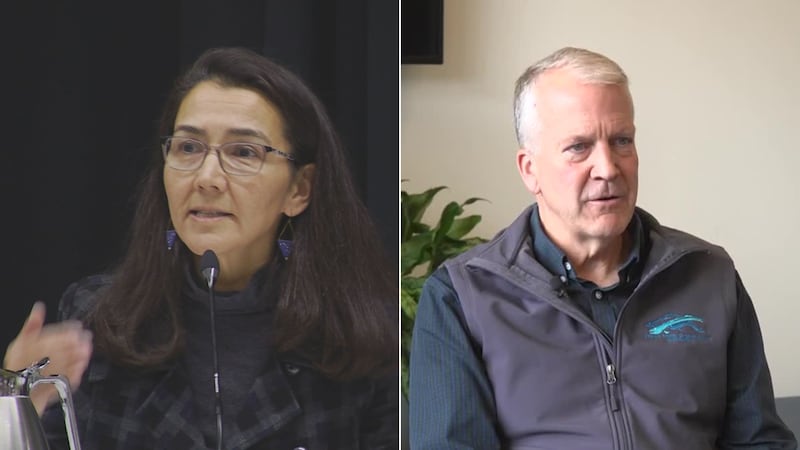
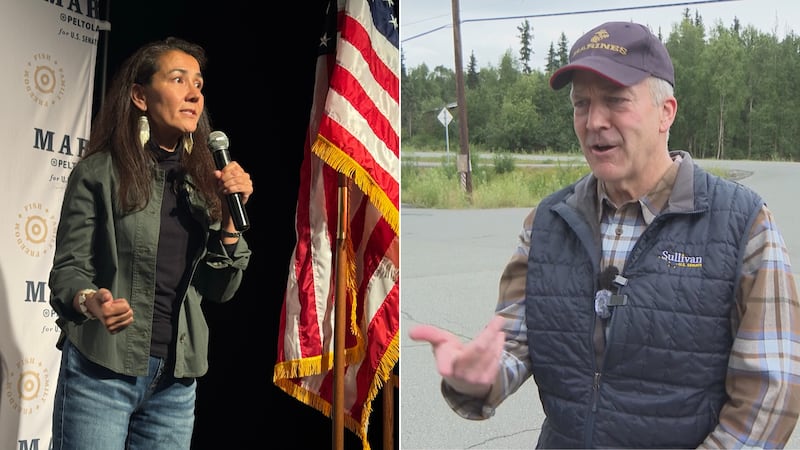
Rep. Nick Begich, R-Alaska, and Sen. Dan Sullivan, R-Alaska, both voted for the cuts, though Sullivan said his vote was contingent on a still yet-to-be enacted ‘side deal’ with the Trump administration, which they said was designed to reappropriate green new deal funds towards tribal radio stations.
“OMB and the Department of the Interior reiterated their commitment to supporting Tribal radio stations,” Sullivan spokesperson Amanda Coyne told Alaska’s News Source in an email. “They’ve identified funding and are working through next steps. While the general timing aligns with federal grant cycles, specifics on distribution and communication to stations are still being finalized.”
Critics of the ‘side deal’ - like the President of Alaska Public Media Ed Ulman, said he was not sure if Alaska qualified as having any tribal stations - and was also nervous about how reliable a deal with the administration was.
“I can tell you for a fact that multiple folks in the state of Alaska have explained to the senator and his office how [public media] works and how [the Corporation for Public Broadcasting] is essential to ensuring that the 27 public media outlets in Alaska can remain in operation,” Ulman previously told Alaska’s News Source. “So, this isn’t even a compromise. It’s just not gonna work.”
When Begich described his reason for approving the spending cut, he said Alaska was past the age of leaning on public radio.
“While rural communities have in the past been indirectly supported through state-sponsored media, we must acknowledge how far we have come in terms of connectivity since the birth of radio more than 120 years ago,” Begich said in a statement following his vote. “Alaskan residents have embraced today’s pervasive cellular, satellite, and wireline technologies, connecting rural communities to critical information and resources in rich and compelling ways.”
McKay said she did not agree with the sentiment of Begich’s argument - citing rural differences, such as unreliable internet and cell phone service, and outages following natural disasters.
“Without a radio station or without funding for the reporters that are going to be in the area, those local stories aren’t going to be told and that’s really important to us,” McKay said. “That’s what connects us. We have this huge geography and a way to connect, and we don’t know what’s happening in another town without somebody telling that story.”
See a spelling or grammar error? Report it to web@ktuu.com
Copyright 2025 KTUU. All rights reserved.